The Future of Automation: Inside the Robot Assistant in Production Conveyor Systems
Manufacturing floors are undergoing a quiet but profound transformation. Gone are the days when automation meant rigid, single-purpose machinery bolted to the floor, incapable of adaptation. Today, the spotlight shines on agility, precision, and intelligent collaboration. At the heart of this shift is the Robot Assistant in Production Conveyor systems, a technological marvel that redefines how goods are moved, sorted, and assembled. This isn't just about replacing human labor; it is about augmenting industrial capacity with a level of meticulous design and build quality that was previously unattainable.
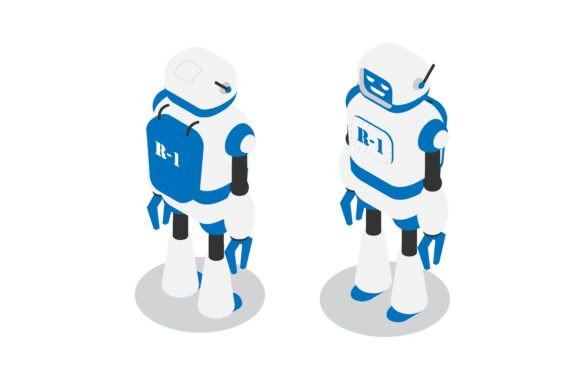
When we visualize these modern assistants, we often picture sleek, white forms isolated against clean backgrounds, emphasizing their purity of function and form. This aesthetic is not merely for marketing brochures; it reflects the underlying engineering philosophy. The immersive isometric vector 3D design often used to showcase these units highlights every joint, sensor, and actuator. It allows engineers and plant managers to see the robot from both the front and back, appreciating the symmetry and balance required for high-speed operations. This detailed view underscores a critical point: in modern manufacturing, transparency in design leads to reliability in performance.
Precision Engineering Meets Industrial Demand
The primary role of a Robot Assistant in Production Conveyor lines is to handle tasks that require repetitive precision at speeds humans cannot match sustainably. Whether it is picking items from a moving belt, placing components with sub-millimeter accuracy, or performing quality control inspections, these robots are built for endurance. The construction materials are chosen not just for durability, but for weight reduction. A lighter arm can accelerate and decelerate faster, reducing cycle times and increasing overall throughput.
Consider the intricate dance of a packaging line. Products arrive irregularly spaced, perhaps in different orientations. A traditional mechanical sorter might struggle, leading to jams or misalignments. However, an intelligent industrial aid equipped with advanced vision systems can identify each item instantly. It calculates the optimal grip point and trajectory in milliseconds. This capability transforms chaotic input into streamlined output. The robot doesn't just move objects; it understands them. This cognitive layer is what separates next-generation automation from its predecessors.
The Importance of Isometric Design in Visualization
You might wonder why the visual representation of these robots matters so much. The answer lies in integration planning. Before a single bolt is tightened on the factory floor, digital twins and 3D models are used to simulate workflows. The isometric vector 3D design provides a comprehensive perspective that flat diagrams cannot. By viewing the robot assistant in isolation on a white background, designers can focus entirely on the mechanics without visual noise. This clarity is essential for identifying potential collisions, optimizing reach envelopes, and ensuring that the robot fits seamlessly into existing conveyor infrastructure.
This attention to visual detail mirrors the physical reality. Every cable is routed to prevent wear, every joint is sealed against dust and debris, and every surface is designed for easy cleaning. In industries like pharmaceuticals or food processing, hygiene is paramount. The smooth, uninterrupted surfaces of modern robot assistants prevent bacterial buildup, making them ideal for sterile environments. The design is not just about looking futuristic; it is about meeting stringent regulatory standards while maintaining operational efficiency.
Integrating Intelligence into Workflow
The true power of a Robot Assistant in Production Conveyor setup lies in its connectivity. These machines are rarely standalone units. They are nodes in a larger network, communicating with warehouse management systems, other robots, and human operators. This interconnectedness allows for real-time adjustments. If a downstream station slows down, the robot can adjust its pace to prevent bottlenecks. If a defect is detected, it can automatically reroute the item for inspection.
This dynamic responsiveness is crucial for modern supply chains, which face fluctuating demand and diverse product mixes. Flexibility is no longer a luxury; it is a necessity. A production line that can switch from assembling smartphones to packaging cosmetics with minimal reconfiguration offers a significant competitive advantage. The robot assistant facilitates this flexibility through software-defined movements rather than hardware changes. Operators can upload new programs via a tablet, and the robot adapts instantly. This reduces downtime from days to minutes.
- Enhanced Safety: Modern robots are equipped with force-limiting sensors and collision detection, allowing them to work safely alongside humans without heavy caging.
- Data Analytics: Every movement generates data. Managers can analyze this information to identify inefficiencies, predict maintenance needs, and optimize energy consumption.
- Scalability: Modular designs mean you can start with one unit and add more as production volumes grow, spreading the investment over time.
Addressing Common Adoption Concerns
Despite the clear benefits, many businesses hesitate to adopt automated solutions. Cost is often the first barrier. However, when evaluating a Robot Assistant in Production Conveyor, it is essential to look beyond the initial purchase price. Consider the total cost of ownership. Reduced waste, lower labor turnover costs, increased uptime, and higher quality control all contribute to a rapid return on investment. Furthermore, leasing options and robotics-as-a-service models are making these technologies more accessible to small and medium-sized enterprises.
Another common concern is complexity. Will my team be able to operate and maintain this sophisticated equipment? The industry has responded by prioritizing user-friendly interfaces. Drag-and-drop programming, intuitive dashboards, and remote support capabilities have lowered the technical barrier. Training staff to work with these robots is less about coding and more about process logic. Employees transition from manual laborers to robot supervisors, a shift that often improves job satisfaction and retention.
Maintenance is also simpler than one might expect. The meticulous design mentioned earlier includes self-diagnostic features. The robot can alert technicians to worn components before they fail, preventing unexpected breakdowns. Spare parts are standardized and easily accessible. This proactive approach to maintenance ensures that the production line keeps moving, maximizing productivity.
The Intersection of Design and Technology
The Robot Assistant in Production Conveyor represents more than just a tool; it is a symbol of industrial evolution. It captures the essence of innovation where form follows function, yet both are executed with artistic precision. The clean lines and minimalist aesthetic are not accidental. They reflect a commitment to efficiency and clarity. In a world cluttered with complexity, these robots offer a streamlined solution.
As we look to the future, the role of these assistants will only expand. We are seeing developments in artificial intelligence that allow robots to learn from experience. Imagine a robot that improves its picking strategy over time, adapting to new products without explicit programming. This machine learning capability will further enhance the versatility of production lines. The integration of haptic feedback will allow robots to handle fragile items with the delicacy of a human hand, opening up new possibilities for automation in delicate industries.
Moreover, sustainability is becoming a key driver in design. Energy-efficient motors, regenerative braking systems, and recyclable materials are being incorporated into the build. Companies are increasingly aware of their environmental footprint, and choosing eco-friendly automation solutions is part of that responsibility. The robot assistant is not just boosting productivity; it is helping manufacturers meet their green goals.
Practical Steps for Implementation
If you are considering integrating a robot assistant into your workflow, start with a thorough audit of your current processes. Identify bottlenecks, repetitive tasks, and areas with high error rates. These are the prime candidates for automation. Engage with vendors who offer comprehensive support, from initial consultation to post-installation training. Look for solutions that are compatible with your existing infrastructure to minimize disruption.
It is also wise to start small. Pilot a single unit on a specific task. Measure the results, gather feedback from your team, and refine the process. Once you have proven the value, you can scale up. This phased approach reduces risk and allows your organization to adapt gradually to the new technology. Remember, the goal is not to replace humans but to empower them. By handling the mundane and dangerous tasks, the robot assistant frees your workforce to focus on creative problem-solving and strategic initiatives.
In conclusion, the Robot Assistant in Production Conveyor is a testament to how far industrial technology has come. It combines cutting-edge engineering with intelligent software to create a system that is efficient, flexible, and reliable. As these technologies continue to evolve, they will play an increasingly central role in shaping the factories of tomorrow. Embracing this change is not just about keeping up with trends; it is about securing a competitive edge in an ever-evolving global market. The future of production is here, and it is automated, intelligent, and remarkably precise.